
We are thrilled to announce that John Smith has joined NEAR Inc as its Chief Information Security Officer (CISO). John will be leading NEAR Inc’s information security strategy, working closely with core development teams, partners, and the ever-expanding NEAR community.
“John has the right background, experience, and network to do the hard work of elevating trust in the blockchain community,” says Illia Polosukhin, the CEO of Near Inc. “He comes to us with a history of solving complex technical problems at scale across challenging industries.”
John is a seasoned cybersecurity professional—having led highly collaborative teams at iconic threat intelligence, security, and technology companies; serving clients at every scale across an array of industries. In his previous role as the VP of Business Information and Product Security at the global ad ratings company Nielsen, he led all aspects of application and cloud security. At Nielsen, he transformed the relationship between developers and the security organization, shifting DevOps to DevSecOps. Early in his career, John also served at the US Nuclear Regulatory Committee, working on digital transformation, alongside reactor programs and human safety. There he learned to understand and appreciate the detailed nuances of risk analysis, applied in complex high-stakes environments.
While John will be responsible for ensuring traditional security practices are maintained at NEAR, he will be particularly focused on developing and enabling scalable security practices for smart contract developers and ensuring the security of dApps when they go live.
Scalable Security
Interest in DeFi continues to soar and NEAR is uniquely positioned to drive massive adoption of this revolutionary technology while continuing to build the foundations of Web3.
NEAR Inc. is achieving this through dedication to developer friendliness, scalability, cross-chain interoperability, and performance. These are the features that drive adoption.
However, these features don’t guarantee that blockchain and cryptocurrency are free of issues. We’ve seen the ramifications of development mistakes and attacks on DeFi protocols and smart contracts.
This creates another barrier to adoption—trust—and it limits the adoption of not just a single protocol, but all of Web 3.0. Ensuring the security of the NEAR protocol and elevating the practices of the entire NEAR development community are crucial to earning that trust and attracting new participants to take part in the future of finance and the web.
We are excited that John has joined our team to help us achieve these goals. His work will help NEAR Inc. continue to build out a secure and scalable blockchain designed to onboard the world into Web3.
The NEAR ecosystem is announcing a monumental $800 million in funding initiatives targeted at accelerating growth.
The announcement, which includes the $350 million in funding announced by Proximity Labs last week – reported in Bloomberg – is designed to build on the momentum in the NEAR ecosystem over the last 12 months.
While NEAR is giving all communities access to this record amount of funding, it will be focusing on Decentralized Finance (DeFi) teams who are actively revolutionizing and reimagining the way we interact with money.
DeFi projects on NEAR have already hit a significant milestone of more than $150M Total Value Locked (TVL). NEAR has an ambitious goal to grow that number quickly and securely. NEAR is also actively looking for projects focused on NFTs, DAOs, and gaming.
NEAR’s next chapter is all about fostering growth by helping developers access best-in-class support and providing users with a frictionless experience using and navigating the web3 world. New funding helps accelerate this process.
NEAR levels up
Of the $800 million in funding, $100 million will be allocated to Startup Grant Pools. More than 20 startups will be identified and given $5M each in funding to redistribute to key stakeholders – the ecosystem ultimately decides who gets funding.
Some $250 million will be allocated to ecosystem grants helping existing projects further develop and scale. The remaining $100M will be allocated to Regional Funds: money allocated to foster the development of NEAR’s largest community regions in Asia, Europe, and the US.
Prior to this announcement, NEAR had already spent $45M across more than 120 projects, including Core Protocol Infrastructure Grants to the likes of:
The sleeping giant awakes
NEAR has been building on its roadmap steadily and securely. Later this year, it will launch the next phase sharding, nicknamed Simple Nightshade. NEAR will go from one to four shards, increasing scalability while not compromising on simplicity. Developers won’t have to add any additional code to smart contracts or adjust their platforms and users will continue to experience the same great UX, but at faster speeds.
Once complete, NEAR will be decentralizing further by lowering the barrier to entry to its validator network, increasing the number of validators first to 100, and then to a few hundred in Q1 2022. As part of this process, there will be further funding to projects helping the rollout and development of NEAR’s sharding technology.
Stay tuned for more information.
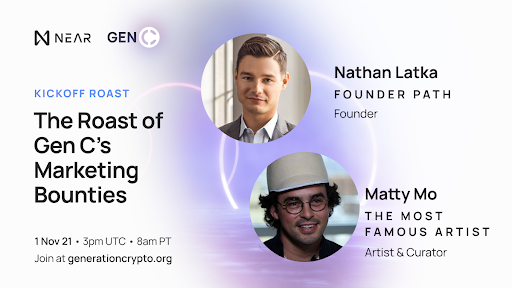
NEAR is launching a marketing competition and virtual conference with more than $1 million in prizes and funding. Taking place between November 1-30 2021, Gen C 2021 is for anyone looking to help solve some of crypto, and tech’s biggest challenges.
Join incredible speakers, thought leaders, and founders of crypto and technology companies across 50 sessions exploring marketing problems and how you might go about fixing them.
Our sponsors have great products, but need your help finding product-market fit. Many sponsors have time-tested, existing products with low costs to acquire high lifetime value customers. They’re thinking about starting new product lines.
Others are entering digital marketing for the first time. They’re looking for marketers to help showcase their technology in an exciting and engaging way.
This is Big. We have amassed more than $1,000,000 in marketing contracts for successful applicants. Yep, pitch and put together a proposal for your piece of $1,000,000.
Millions in follow-on funding is available for the teams that show the most promise. Help clients reach their marketing goals and get paid.
Then, join the kickoff event November 1st, 8am PST
The NEAR Foundation (“NF”) is a unique kind of organization. It helped to launch both a technological platform — the NEAR Protocol — and the ecosystem around it.
The Foundation, which was introduced briefly last year, is a Swiss-based nonprofit, non-beneficiary organization which uses the power of its financial and operational resources to support the same mission as the overall NEAR Collective, which is the grouping of all active participants who make up and drive the NEAR ecosystem. This mission is:
…to accelerate the world’s transition to open technologies by growing and enabling a community of developers and creators.
In line with the core value of Openness, the goal of this post is to provide more clarity about how the NF organizes itself, how it operates, how it defines success and what vision it is working to achieve.
The Vision of the NF
While it shares a mission with the entirety of the NEAR Collective, the Foundation’s role in this is to realize a more specific vision:
…a self-sufficient ecosystem of creators, developers, entrepreneurs, community members and tokenholders whose collaborative efforts make the NEAR ecosystem the best place to build massively impactful projects in the Open Web.
This vision requires that NEAR become the best ecosystem in the world on several fronts:
NEAR needs to have the best ecosystem-level clarity. This means that all participants in the ecosystem have a clear understanding of what the platform is good for, what’s going on in the ecosystem and how to access resources. Large-scale decisions that affect the community, for example large resource allocations or technical governance, are done with proper community input.
NEAR needs to have the best onboarding. Within seconds of first hearing about NEAR, a prospective builder understands what they can build with NEAR and how it’s different from other options. Within the first minute, they are connected with a real human being who can help “sherpa” them through available resources. Within a few more, they are embedded in whatever communities can best support their journey by answering questions, testing products and driving early adoption.
NEAR needs to have the best founder experience. When building their organization, they have easy access to the information they need to make good decisions about hiring, incorporation, compensation, legal and regulatory matters. They have easy access to a clear menu of financing options and support as they navigate them. They have access to an informed, engaged and highly competent pool of human resources for all the roles they need to hire for.
NEAR needs to have the best developer experience. When building their product, devs are confident that they are building on the most reliable and effective technology possible. They have easy access to basic explanations, working examples and documentation. They clearly understand the ecosystem of tools, products and projects that are available to help them and their journey from idea to launch is rapid, iterative, painless and supported by an active, inclusive community. They are also supported by a wide range of project integrations (for example, wallets, payment processors and custody) both to help them build their product and take it to market.
NEAR needs to have the best go-to-market support. When initially testing their product, builders have easy access to an engaged community of early adopters who can help them rapidly find product/market fit. During launch, this community helps them evangelize the product. Builders have access to open knowledge bases of best practices for everything from consumer onboarding to security to growth strategies. After launch, they are supported by broad access to customers, deep secondary markets and continued access to partnerships, capital and exit opportunities.
The NF’s goal is to accomplish these things indirectly. Thus, rather than operating in the ecosystem as an active participant, wherever possible it will make sure this vision is realized by other members of the community in a high quality, scalable and ultimately self-sufficient manner.
What does success for the NEAR ecosystem look like? Ultimately, it comes down to adoption — that the platform and its underlying protocol are in active use by a huge number of people and businesses around the world. While there are many ways to measure this, the most straightforward 3 which can be used to determine success in the next 18 months are that the NEAR ecosystem generates the most economic activity (GMV), support the highest total market cap of projects and host the most active users of any other blockchain-based ecosystem.
Analogues for understanding the NF
The NF’s mandate to provide support for the ecosystem, without actively operating it, doesn’t map exactly to any existing business model. It is closest to a full-service venture capital firm like a16z — its “portfolio” comprises all of the applications and companies that operate within the NEAR ecosystem. The NF’s job is to allocate them the resources they need to be successful while supporting them in whatever ways possible. All of this occurs within an extremely fast-moving, tech-forward and competitive space.
There are a few key differences between the NF and a full-service VC:
- The “return” of the portfolio is not capital but adoption of the protocol by each of the key stakeholder groups. So the NF will place its allocations with the intention of receiving better adoption above all else.
- The NF operates at one level of abstraction higher than a VC firm. Rather than making bets in individual companies, it needs to operate more like a fund-of-funds model and make generalized allocation decisions across asset categories like other VC funds, DAOs, grant buckets and so on. That allows the NF to stay out of the day-to-day capital allocation game and focus on the high level ecosystem support.
- The NF operates at a much larger scale than a typical full service VC. Rather than just a portfolio of dozens of companies, the NF needs to support hundreds or thousands of developers, founders, integrators and beyond. So its support efforts need to scale to become fully open and community-driven wherever possible.
- The NF takes on some aspects of a venture accelerator as well, in that, if the ecosystem is missing a particular element, it may incubate the team which develops this particular component or business until it is ready to spin out.
The NF shares another similarity to a defined-horizon VC fund — its long term mission is also to make itself completely unnecessary. In this case, that’s because a completely well-functioning antifragile ecosystem has all the components it needs to be successful regardless of the efforts of a foundation. Ideally, companies and communities combine to handle all of the governance, roadmapping and capital allocation activities that the NF handled during the early days of the ecosystem’s development.
In fact, success in 5 years means that the NF has wound down its core entity and sustainably handed off each of its core functions to teams within the ecosystem which have sustainable mandates.
The team of this foundation needs to combine a fanatical focus on adoption with an open source, community-first, inspiration-driven approach to creating alignment among ecosystem participants. Each person needs to be incredibly values-aligned with the 5 key NEAR values and each of its leaders will need to craft and communicate strategy both to internal teams at the NF and to the ecosystem overall.
Responsibilities of the NEAR Foundation
As a “portfolio manager” of the NEAR ecosystem, and inline with the vision above, NF is ultimately responsible for driving the success of the applications which make up this ecosystem via 3 major categories of activities:
- Awareness: Raise awareness of the NEAR technology, platform and ecosystem such that more developers, community members, enterprises and entrepreneurs build new portfolio companies and projects. This combines education, evangelism, communications, PR, tokenholder relations, analytics and more.
- Allocation: Spend both its discretionary (100M NEAR token endowment) and advisory (major ecosystem token buckets) tokens to capitalize the best initiatives within the ecosystem. This is primarily via a fund-of-funds level of abstraction, so the NF is allocating resources to other people who will actually deploy them “on the ground”. Its only granular allocation tool is the Grants Program, which accepts applications for small grants for a wide range of ecosystem-supportive activities, which are at least partially informed by the NF’s roadmap.
- Support: Create as much value as possible for ecosystem projects without actually stepping in and operating at all. This means supporting in a number of key way, including creating the operating framework and coordination so the NEAR community is well organized, well supported and capable of routing people, answers and resources to the teams that would benefit most from them.
- Operational Advisory: Create the self-serve resources, best practices and events which give projects the resources they need to solve problems with hiring, HR, legal, regulatory, financial and operational challenges.
A key question is also what the NF is NOT doing. Except in truly extraordinary cases, the NF is…
- NOT going to market: NF is NOT operating GTM initiatives for any specific products or technologies to generate revenue or reach end-users unless it is a test case or early stage incubation for something that will be spun out as an independent initiative. When a project or initiative starts pushing to a market, it must be helmed by an entrepreneur and spun out.
- NOT developing: NF is NOT providing direct development support to deals, companies or projects in the ecosystem. This is not a development shop.
- NOT running a true VC or syndicate: NF is NOT allocating to specific projects or entrepreneurs outside of the Grants Program because that doesn’t offer enough leverage.
- NOT a lawyer, accountant, etc: NF will contribute to legal and regulatory discussions but will never be a substitute for hiring professionals in these categories.
In each of these categories, NF may have some exposures but they are only temporary such that it is bootstrapping an effort or supporting an entrepreneur who can spin these things out.
How NEAR’s Success is Defined
The NEAR ecosystem’s success is driven by 3 key priorities, which are shared by the NF:
- Awareness: How many people know about and can accurately describe NEAR’s value proposition?
- Adoption: How much usage is the platform getting from each of its key stakeholder groups:
-
-
- Consumers (Monthly Active Accounts, “MAA”)
- Financials, (Total Value Locked, “TVL”)
- Developers, (Monthly Active Developers, “MAD”)
- Apps, (Total financing raised)
- Community Members, (Onchain Community Members)
-
- Credibility / “Legitness”: Do people within each stakeholder group who know about NEAR have a very high opinion of its quality and prospects for success?
The NEAR ecosystem’s overall success is difficult to measure, but two metrics which represent opposite ends of the spectrum are the total market cap of projects within the ecosystem (but which can be influenced heavily by market forces) and the gross marketplace value of transactions driven by the platform (both on chain and off).
How Culture and Values Apply
NEAR has always been primarily driven by deeply technical people trying to apply the lessons of Silicon Valley startups to actually build something real humans want using the blockchain technology. This project wasn’t started and doesn’t continue because of commercial intent but rather to create a rippling wave of change and value creation across the application stack.
Our values reflect this and everyone actually works hard to live by them. Below are the values themselves as well as the way the NF specifically embraces them and where it needs to do better:
- ECOSYSTEM-FIRST: always put the health and success of the ecosystem above any individual’s interest.
- The NF works tirelessly to create value for participants in the ecosystem. Everything from resource sharing to team vesting contracts are structured such that what matters most is the overall health of the ecosystem.
- OPENNESS: operate transparently and consistently share knowledge to build open communities.
- The NF has historically been strong in the sharing of resources and education but needs to put the time into better communication around its activities in order to better include the community.
- PRAGMATISM OVER PERFECTION: find the right solution not the ideal solution and beat dogmatism by openly considering all ideas.
- The NF doesn’t play favorites and is ultimately here to make everyone successful, regardless of where they come from. It has avoided many pitfalls of bureaucracy along the way, and has a healthy dose of pragmatism.
- MAKE IT FEEL SIMPLE: strive to make the complex feel simple so the technology, platform and ecosystem are accessible to all.
- The NF doesn’t make first party products but it is a service organization. Some of its services to teams in the ecosystem (eg routing deals or help requests or just making internal team requests for resources smoother) could be greatly simplified, which has been a focus in early summer 2021.
- GROW CONSTANTLY: learn, improve and fail productively so the ecosystem and the community are always becoming more effective.
- The NF has liberally supported team members in their personal (eg managerial) growth. Early summer 2021 efforts are focused on helping spread the resources for ecosystem participants to also learn and grow themselves, for example by contributing to the Open Web Atlas.
Operating the NF
The NF is a porous, open organization so many of its activities will be done as openly as possible but it still has many internal processes to keep the team aligned and performant. Its rhythm is as follows:
- Annually:
- Performance reviews across all teams (NFC, leadership, team leads, members)
- Review of Mission, Vision, Values and multi-year Objectives (NFC, leadership, team leads)
- Quarterly:
- Review individual team Missions and Visions (leadership, team leads)
- Review prior quarter’s OKRs (leadership, team leads)
- Submit, review and approve forward-looking quarter’s OKRs (leadership, team leads)
- NF Council meets officially (NFC, leadership, team leads)
- Monthly:
- Coordinate or seed the hosting of external-facing Town Hall events with the community (community team)
- Prepare and publish the Ecosystem Review to NFC and to the community (leadership support team)
- NF Council calls informally (NFC, Leadership)
- Bi-weekly:
- Internal All Hands sessions to coordinate internal teams (everyone)
- Review KR progress (leadership with team leads, team leads with members)
- Coordinate 2-week sprints (team leads with members)
The Future and Scorecard of the NF
The NF has provided — and will continue to provide — many of the early resources that have been helpful to the early ecosystem but its ultimate goal is to make itself completely redundant and unnecessary by establishing robust communities across the ecosystem to handle all of its core functions.
As noted in the vision previously, the role of the NF is thus the role of any great entrepreneur — to scale itself out such that better teams and better leaders are able to take up the charge. It will bootstrap where necessary and then empower the ecosystem around it to improve and scale each of its areas of focus.
The NF has made extraordinary progress in less than 2 years towards creating a self-sufficient ecosystem but there is still plenty to bootstrap and many more handoffs to coordinate. NF will continue to deploy resources heavily to support key efforts but it will make sure all core support activities it provides are eventually made self-sufficient and are run by great entrepreneurs with sustainable businesses.
Success for the NF in 5 years thus means that it has wound down its core entity and sustainably handed off each of its core functions to teams within the ecosystem which have sustainable mandates. It’s an ambitious goal but an achievable one.
In the long term, the NEAR ecosystem itself will become the hub of a global universe of blockchains which support the Open Web. While there are many paths to get there and it will ultimately be driven by the founders and developers of the NEAR ecosystem, the NF is here to guide and support their journeys all along the way.
Post by Yessin Schiegg
Builders on NEAR, join us and offset your carbon footprint! How can a decentralized blockchain that uses energy be climate neutral? – It can, by a commitment to measure, reduce, and offset its carbon footprint with green projects. NEAR Protocol has been awarded the Climate Neutral Product Label from South Pole.
We, as human beings, are inherently a threat to our planet’s climate by emitting carbon dioxide (CO2) and other greenhouse gases. However, by making the right choices, we can create systems that reduce and even remove emissions and preserve a healthy environment. A tribe that plants more trees than it chops down may claim climate neutrality, even though its members are making fires. To sustain a healthy climate, we need to reach a net-zero level of emissions which involves reducing emissions as much as possible and then removing the remaining emissions either through nature-based solutions or technological solutions that draw CO2 out of the air. Otherwise, the level of greenhouse gases in the world’s atmosphere continues to increase, leading to global warming.
Technical carbon-capturing solutions are still rare and expensive. Currently, nature offers the only reasonably cost-effective carbon-capturing mechanism. Chlorophyll is the molecule that is vital for photosynthesis and renders our world green. It allows plants to absorb energy from light by capturing CO2 and emitting oxygen into the atmosphere.
Planting trees is a great solution, but it is wiser and less expensive to reduce carbon emission in the first place. Significant areas to start reducing carbon emissions are the systems that we control ourselves. If we cannot reduce our own carbon footprints, we can reduce the carbon footprint in other systems. For example, an airline can’t eliminate its carbon footprint with today’s technologies. Therefore, the airline could reduce the CO2 production by replacing the combustion engine-powered shuttle systems of its airports with green alternatives powered by renewable energy. If it becomes prohibitively expensive to reduce the carbon emissions in a particular system, resources can be transferred to another system to pay for the necessary reduction. This is essentially how carbon offsetting functions.
Saving the climate is not a matter of faith, as many believe in error. It’s a matter of science and commitment. Science helps us set the necessary targets, which we reach by measuring, reducing, removing, and offsetting carbon emissions. Measuring a company’s carbon footprint is not easy and never perfect. It’s nevertheless a great start to begin to understand the impact of your company on nature. The commitment to improve our situation then helps deploy the resources required to bring an emissions balance to our planet.
For a decentralized protocol like NEAR, it does not matter that not every participant is carbon neutral, but the network should be carbon neutral as a whole. NEAR Foundation engaged South Pole, the leading low-carbon project developer, and climate solutions provider, to measure NEAR Protocol’s carbon footprint and meet its climate neutrality commitment. By offsetting the first year’s emissions by supporting tree-planting projects and seeking to reduce avoidable emissions until the second accounting year, NEAR achieved South Pole’s Carbon Neutral Product Label 2021. The three green projects supported by NEAR are Kariba Forest Protection, Vegachi Forest Restoration, and Afognak Forest Carbon, as listed here.
South Pole assessed NEAR Protocol’s carbon footprint by considering the emissions of NEAR Foundation, the Members of NEAR’s Core Collective, the NEAR Validators, and the use phase of the Protocol (NEAR users initiating transactions). Following the Greenhouse Gas Protocol Standard, the scope of the footprint accounting encompassed both direct and indirect emissions associated with the NEAR Protocol: everything from electricity use, heating, and cooling, to purchased goods and services such as hardware and cloud services, to generated waste as well as travel, commuting and teleworking activities. Data that was not centrally available was surveyed, and South Pole critically reviewed the feedback and data before NEAR’s carbon footprint was calculated from these inputs. A surprise was that business travel and commuting by the Core Collective Members accounted for most of NEAR Protocol’s carbon emissions.
Simultaneously, the use phase, namely the online activity around transaction initiation, constitutes only a tiny fraction of the footprint. The emissions from validator activity play a significant role for NEAR’s indirect emissions relative to other categories. However, this needs to be understood in the light of an overall small footprint due to the advantages of a proof-of-stake protocol instead of proof-of-work. While NEAR’s footprint can be expected to increase with future scaling, both validator activity and use phase can be expected to stay by far below the enormous climate footprint of proof-of-work networks. This finding, therefore, supports the notion that proof-of-stake offers a more climate-friendly alternative to proof-of-work. The quantification of NEAR’s first footprint was done to the best available methodological knowledge. Due to the early stage of performing this for proof-of-stake blockchains, some future changes can be anticipated, and to be on the safe side, NEAR decided to compensate a bit more than was calculated by South Pole.
By pioneering climate-friendly solutions, NEAR Protocol attracts like-minded people who are seeking to commit to improving the climate too. While doing your transactions on the NEAR Protocol is offsetting CO2 already. But we are looking at innovative ways to take it a step further so that every project building on NEAR can easily measure and offset its carbon footprint! Plenty of ideas are emerging, and separate projects are currently being formalized. One of them could be very positive for the climate: With the upcoming release of the NFT platform Mintbase on NEAR, crypto artists will create NFT art pieces that thematize South Pole projects. The artists will then auction the NFTs off, and a large part of the proceeds will go directly to the CO2 compensation projects in developing countries. These projects are results-based, so a project only gets paid for its emission reduction once measured and verified by an independent 3rd party auditor.
If you would like to build on NEAR Protocol while offsetting your CO2 footprint, participate as an artist in the NFT project, or have an idea for any climate-friendly initiative, please reach us at [email protected]. We look forward to discussing with you how blockchain technology can help improve the world.
The Dilemma
In the blockchain space, energy consumption has become a point of focus for believers and skeptics alike, particularly as popularity and awareness have increased in the past six months. These debates generally begin with Bitcoin, the first blockchain with the highest market cap and greatest global awareness today.
Bitcoin and PoW (Proof of work)
Bitcoin is a proof-of-work (PoW) blockchain protocol in which miners prove that they extended a certain amount of computational effort before receiving the reward for a validated block. The PoW consensus mechanism is the heart of the blockchain energy debate.
The computational effort of producing blocks is made by putting thousands of tons of mining gear at work. This equipment consumes high amounts of electricity during production, installation, and operation. The miners compete against each other for block rewards and tend to gear up as long the block reward is higher than their spending on gear and electricity; much of this computation energy is wasted in the race to earn the reward. The block reward is currently 6.25 BTC created by inflation and paid out approximately every 10 minutes.
Energy consumed via PoW
Depending on the electricity source, the PoW mining activity comes with a high carbon footprint, both because it is inefficient and because the global scale of Bitcoin mining now rivals the energy consumption of some nations. Some miners claim to operate climate neutral by employing hydro or nuclear power in running their mining rigs. However, due to the vast extent of electricity consumption, these energy sources take a considerable toll on the environment and come with long-term disposal issues (as do many other forms of computer hardware) too.
Based on Digiconomist’s Energy Consumption Index, Bitcoin generates a whopping 37 million tons of CO2 emissions annually. Breaking this down to the 365 days per year and the approximately 330,000 transactions per day on the Bitcoin blockchain, a Bitcoin transaction generates about 0.3 tons of CO2 exhaust. That is the equivalent of the carbon footprint of a 1,600 km (or 1,000 mile) car ride on a car that consumes 8 liters of gas per 100km. You can also think about it as burning 130 liters of gasoline for just one Bitcoin transaction.
If you transfer Bitcoin to an exchange, the exchange typically transfers your Bitcoin to a pool with another transaction on the blockchain. By that measure, there goes another 1,600km equivalent of CO2 exhaust. Now add a test transaction too, and in aggregate you caused the carbon footprint of a car ride from San Francisco to New York by pushing a few buttons.
Ethereum and PoW (Proof of work)
Ethereum, the second biggest blockchain by market cap, also runs on PoW consensus but has a considerably lower carbon footprint than Bitcoin. According to the Digiconomist’s Energy Consumption Index, Ethereum generates approximately 12 million tons of CO2 emissions annually, which is about a third of Bitcoin’s. Ethereum allows for about four times as many transactions per second vs. Bitcoin. Therefore, Ethereum transactions result in approximately 12 times lower carbon footprint than Bitcoin transactions. Unfortunately, that is still like burning 12 liters of gasoline per transaction or a carbon footprint of 27 kilograms of CO2 per transaction.
Ethereum 2.0 and PoS (Proof of Stake)
Ethereum is working on a network architecture upgrade to Ethereum 2.0 that will roll out over the next several years. By the time the final stage of the upgrade is complete, proof-of-stake (PoS) consensus will replace PoW to maintain the network. In PoS, there are no miners that prove a computational effort. Instead, validators put up a certain token amount as a stake to prove that they have skin in the game before they get to validate blocks and collect a block reward.
The energy efficiency of PoS is orders of magnitude better than PoW and, unlike PoW, it doesn’t suffer from economies of scale, so validators are not incentivized to maximize their hardware footprint in the same way. While the Beacon chain, the so-called “heartbeat” chain at the core of Ethereum’s new architecture, has already launched, it will take at least a couple of years before users can build and transact on ETH 2.0.
Ethereum 2.0 will not be the first PoS blockchain to go live. Several, including NEAR Protocol, are already running today.
NEAR Protocol and PoS – the Greener Alternative
The NEAR Protocol, launched in 2020, is a third-generation blockchain based on PoS, processes 1,000 transactions per second while running much more efficiently than PoW chains. This throughput will increase further with sharding, a blockchain scaling technology that divides computation across parallel “shards.” Developers find it easy to build on NEAR, and the toolset of the blockchain is growing very fast.
Beyond just energy efficiency with PoS consensus, the NEAR Foundation has committed to making NEAR Protocol climate neutral this year. In February 2021, NEAR Protocol engaged South Pole, a leading project developer and global climate solutions provider headquartered in Zurich, Switzerland, to assess NEAR’s carbon footprint, reduce it where possible, and fully compensate the remaining exhaust with CO2 offsetting projects going forward. South pole considered the NEAR Foundation’s carbon footprint, the Core Collective (all employees and contractors working on the NEAR Protocol), and all validators in the assessment.
The results show that the NEAR Protocol currently generates a carbon footprint of 174 tons of CO2 per year. Therefore, NEAR Protocol is more than 200,000 times more carbon efficient than Bitcoin, mainly by applying PoS instead of PoW.
Another advantage of PoS is that the carbon footprint of NEAR will only marginally grow by the increasing transaction throughput. Compensating that footprint with reforestation projects makes the NEAR Blockchain carbon neutral. Doing transactions on NEAR plants trees in Colombia, Zimbabwe, and the United States via these carbon offsetting projects.
Follow all the news on NEAR via our Twitter, or join our community via our Discord server.
Now that inflationary rewards are live, token holders are able to earn rewards from staking. Even without running a node, they can support the stability and security of NEAR by staking to validators. In just a few weeks, more than 250 million NEAR tokens have been staked, representing 25% of all NEAR in existence. We’re overwhelmed by the amount of community support and engagement that’s ignited over the past few weeks and are excited to continue helping fuel the community’s growth.
In this article we will explore the importance of distributing stake among validators, the NEAR Foundation’s efforts to help kickstart the validator community with Delegation Funding, and two new recipients of NEAR Foundation Stake.
Distributing Stake to Validators
On Proof of Stake blockchains, it is common for token holders to converge on the few staking pools run by validators that already have most of the stake as they seem the most popular. While this is normal and repays the hard work of validators, it can have an impact on the protocol reliability and governance.
On one hand, in the unlikely scenario that the top 25% of validators go offline in a PoS blockchain, 25% of the blocks will need to be re-allocated to other nodes, which translates to slower transaction confirmations, or smart contracts needing additional time to be executed, at least until these top validator nodes come back. This may become even more evident if the top 33% goes offline: at that point, the consensus would be missing, no new blocks would be produced, and no transactions or smart contracts would be processed. In the opposite situation, if the smallest validators go offline, the protocol will miss only a few blocks, which would be almost undetected by the user.
On the other hand, this convergence can influence governance: in a liquid democracy, PoS blockchains use the staking size to weight the vote from a validator: the higher the stake, the bigger the influence on the vote. This means that every staked token gives a perpetual vote right to the validator of choice, at least until funds are delegated to a different staking pool, or unstaked completely. In a scenario where a PoS protocol is voting for a controversial change, the same top 33% validators can control the vote outcome, thanks to the delegation in their staking pool. 67% of stake is required for validators to “vote yes” on a proposal, so the most powerful validators can provide enough voting power to stall the vote or keep things unchanged.
While it’s extremely unlikely that NEAR validators will decide against the interest of the community, NEAR Foundation is anyway actively involved in keeping protocol decentralization one of its top priorities, and have as many validators as possible in the top 33%.
With that, here are three new Governance- and Validator-related initiatives that the NEAR Foundation is excited to announce:
- The NEAR Governance Community
- Unstaking Foundation’s Tokens
- NEAR Foundation Delegation Pilot Program
NEAR Governance Community
The NEAR Governance Community launched last week as a forum for the community to discuss topical NEAR protocol improvements and governance initiatives. The first two issues submitted are the Phase II Governance Review and the Block Producer Selection Algorithm. While the content of proposals may be very technical at times for most token holders to contribute to, validators are encouraged to be actively involved in the conversation to signal to the community that they are aligned with their needs.
As a token holder selecting Validators to stake to, you can follow these conversations to get a better understanding of the commitment and direction different validators want to take the community, and elect to stake with validators that align with your beliefs regardless of the size of their staking pool.
Unstaking NEAR Foundation Tokens
With the launch of Phase One in August, the NEAR Foundation delegated 28.8 million tokens to a small number of staking pools, to kickstart the network and help validators become active while the community was claiming their own tokens.
This week, NEAR Foundation will withdraw its funds from the staking pools in the top 33% in order to help more evenly distribute stake among all validators now that more token holders from the community have started to stake. In alphabetical order, these validators are: astro-stakers.poolv1.near, bisontrails.poolv1.near, chorusone.poolv1.near, cryptium.poolv1.near, dokiacapital.poolv1.near, figment.poolv1.near, staked.poolv1.near, and zavodil.poolv1.near.
While these validators represent an example of integrity and commitment to NEAR Protocol, this operation will reduce the gap from the lower 67% of validators, and will free up additional resources to onboard more validators to NEAR (see below).
NEAR Foundation Delegation pilot
Initially introduced in the Stake Wars is over blog post, the NEAR Foundation has been piloting a program to select new validator candidates to stake to in order to help onboard them into the NEAR community.
Currently, the minimum stake to become a validator is above 2.2 million NEAR tokens. Below this threshold, the staking pool is not elected and would not have the option to earn token rewards from producing blocks. This is the typical chicken-and-egg problem: as a delegator, why should you give your stake to a pool that is not yet big enough to be elected and produce new blocks? Or if you are interested in being a validator, how will you raise enough stake to start producing blocks and generate rewards to make being a validator a viable endeavor?
The NEAR Foundation is helping to alleviate this cold start issue by providing a temporary delegation of between 1-4 million tokens as a form of “startup” stake to kickstart new validators’ participation in the active validator set, and help them attract delegation from their followers and the NEAR token holder community at large.
As mentioned above, eventually, the NEAR Foundation will progressively unstake these tokens from the validators, as it did with the top 33% validators in the list above, and re-allocate them to other staking pools to continue on boarding more validators to NEAR.
The details of criteria for receiving and maintaining the NEAR Foundation’s stake are outlined in this blog post about the program, but primarily comes down to:
- Reviewing application information potential validators submit in this form
- Asking potential validators to outline goals and KPIs they have to better the NEAR community using this template as an example.
This “startup” stake funding from the NEAR Foundation will help validators earn a seat in the active set and earn staking rewards from the network. Over time, as the minimum stake to be an active validator increases, validators will need to find ways to attract more stake from the community in order to remain in the active set. Practically speaking, if validators receive NEAR Foundation stake, but fail to deliver on their community growth and marketing initiatives, they will fall out of the active set by not attracting enough community token holder stake to maintain their position.
Foundation Delegation Pilot Program Recipients
We’re excited to announce that the Foundation has on boarded the first two organizations in this program to receive stake: Everstake and AUDIT.one.
Why Everstake
Everstake provided a solid growth plan, together with a strong track record in writing original contents for their community of token holders. They already published a blogpost providing basic information about NEAR, and were able to grow their staking pool size above 4 million tokens, even before the NEAR Foundation provided its official support. This is a great example of driving growth from an existing community of token holders. A copy of their submitted request can be found here.
Why AUDIT.one
AUDIT.one is the validator arm of Persistence.one, one of the largest blockchain organizations in India. AUDIT.one is built on the belief that the Validators of today will be the Auditors of tomorrow with economic skin-in-the-game. They are very active on Cosmos, and recently they started to support Polkadot.
Similarly to Everstake, they have a strong track record in generating high-quality content for their followers, along with the translation of technical documentation and papers.
Overall, Audit One becomes an ideal partner to include Hindi-speaking enthusiasts in the community, and help them delegate to a local validator.
Looking Forward
A number of great potential validator candidates have applied to the Foundation Delegation Pilot Program and we will continue to review and support the community as needed to foster the growth of a vibrant decentralized validator community on NEAR.
We encourage all token holders to get involved with the community and meet validator teams who are playing an active role in the health and governance of the NEAR ecosystem. The NEAR Foundation will continue to make this decision process for Foundation Delegation as transparent as possible, while encouraging validators who receive this temporary support to do their best to support the growth of the community as a whole.
In addition to technical prowess and uptime, validators who are providing educational content, exceptional customer service, and helpful tooling and explorers will be the best candidates for the future growth of NEAR.
Join the Community
If you are interested in becoming a validator and participating in this pilot project, submit your application from this link.
If you’re just learning about NEAR for the first time and are seeing this post, we invite you to join us on the journey to make blockchain accessible to everyday people who are excited for the future of the Open Web with NEAR. If you’re a developer, be sure to sign up for our developer program and join the conversation in our Discord chat. You can also keep up to date on future releases, announcements, and event invitations by subscribing to our newsletter for the latest news on NEAR.
The Why of NEAR
When Alex, Illia and the rest of the early team came together in 2018 to explore the ideas that would eventually become the NEAR Protocol, we each used slightly different words to express a single feeling — that the trends of both governments and corporations over the past decade have made it significantly more difficult to drive and distribute innovation than was the case before.
Each of us saw that developers and entrepreneurs need a better set of tools and it was clear that decentralized technologies offer a powerful new opportunity. Most promisingly, the blockchain technology pioneered by Bitcoin and extended by Ethereum uses a fully decentralized architecture to create a system where developers can build apps that have access to a new way of storing and transferring value which enables the development of disruptive business models.
The NEAR Project was born to make those ideas useful for a much wider group of participants. NEAR provides a highly performant open source backbone for running applications that tap into the flow of high value money and data. In today’s world, any app that isn’t a static HTML page can benefit from these tools. NEAR is the first decentralized application platform to allow these applications to reach mainstream usage because they are both performant and usable.
But the NEAR Purpose is larger than just the NEAR Protocol:
Our purpose is to enable community-driven innovation to benefit people around the world.
When we first assembled these words, they struck like a gong and it was clear we had finally articulated the Why which brought us together in the first place. Let’s look at each piece of this statement:
“Our purpose is…” “We” are a wide-ranging collective of developers, entrepreneurs and visionaries who have endorsed this purpose and begun working towards its enablement. While we share the same reason why we are here, we operate across many different areas of the ecosystem and in multiple entities and the world. There is no single leader or controller of this Purpose; it is permissionless.
“…to enable…” We aren’t here to do all the work ourselves… we are emphatically here to create the platform, tools and environment in which others can help themselves. That is how we achieve the greatest leverage for change.
“…community-driven innovation…” Many of the most important innovations which drive today’s businesses grew out of the collaborative nature of the early web and the openness of the entrepreneurial community in general. When the community is allowed to permissionlessly drive innovation, the scope of ideas will always exceed that which can be created through the top-down dictates of a single company or government.
“…to benefit people…” Not all innovation is created equal and we are specifically motivated by those innovations which can be harnessed to improve the condition of real people rather than finding better ways to weaponize their psychology against them as too many of today’s tools do.
“…around the world.” Not all innovation is distributed evenly around the world and so we must ensure that artificial barriers which prevent individuals from accessing markets, information or freedom are overcome.
The NEAR Foundation
While we are excited to say that the NEAR Protocol MainNet genesis occurred on April 22, 2020, NEAR is more than just a blockchain. It is a full suite of tools and protocols and components that are being researched and developed by world class teams who are distributed across the globe. Because of the fractured nature of the creators and the differing goals of each tool that makes up the NEAR platform, there is no single project which represents the fulfillment of the above-mentioned Purpose. Rather, it is the sum of the parts which do so.
The NEAR Foundation (https://near.foundation) is, at the broadest level, the steward of the *full* NEAR purpose. This foundation is an independent nonprofit entity based in Switzerland whose charter directly contains the words of that Purpose. To fulfill it, the Foundation plays a supporting and coordinating role between the players of the ecosystem. It is the lighthouse which helps keep the ecosystem oriented towards the North Star of that Purpose.
The Swiss “Stiftung” (German for “foundation”) structure, which the NEAR Foundation uses, is shared by some of the highest profile projects like Ethereum and Polkadot for a reason. This structure is neither flexible nor simple to operate because there is very strict regulatory oversight within the highly regulated Swiss jurisdiction. Stiftungs are legally bound to pursue their Purpose and funds that have been given to them cannot be removed for any reason except the fulfillment of that Purpose. These reasons are why most decentralized projects have opted for simpler or more flexible legal structures. But they are precisely the reasons why the Swiss Stiftung is the gold standard for projects who are operating reputably, transparently and with positive intentions.
NEAR is a global community effort which could become the backbone for the global economy so it is important to everyone building it — and building *on* it — that everything about it is held to the highest standard. Thus, we have worked to make sure everything from the structure of the Foundation to the code produced in support of the project are set up in a way that engenders trust.
To be clear, there will always be some tradeoffs between effective execution and community involvement, between transparency and privacy, and between short term decisions and long term value creation. But we would rather acknowledge those tradeoffs up front and will do our best to address them as openly as possible so the community has the trust it should in a project of this scope and magnitude.
The Foundation Council
A Swiss Stiftung is directed by an independent council which is similar to a corporate board of directors but with greater regulatory oversight. These members have the power to guide and ratify decisions of the Foundation but they can be removed by the regulatory authority if they are failing to pursue the Foundation’s purpose.
While the Foundation has obviously been operational for some time now, I am proud to officially introduce the first NEAR Foundation Council for the first time. These members were chosen for their particular blend of skills and outstanding reputation within the community:
Mona El Isa

is a serial entrepreneur with a deep history in both traditional finance and blockchain. She is currently the founder and CEO of Avantgarde Finance and previously founded Melonport which built the Melon protocol. As part of Melonport, Mona oversaw the first successful handoff of power from a blockchain foundation to fully decentralized governance.
Richard Muirhead
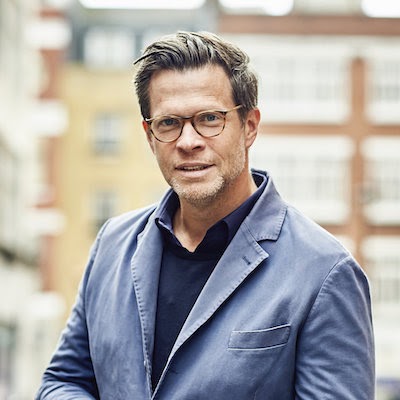
is a successful founder, operator and allocator in the technology space. He co-founded Orchestream in network management (LSE/NASDAQ in 2000, now part of Oracle), founded Tideway in application management (acquired in 2009 by BMC) and led Automic Software in business automation (acquired in 2016 by CA Technologies). Then as co-founder of Firestartr he backed firms like Tray, Citymapper and Transferwise; as GP at OpenOcean (founders of MySQL” and MariaDB) backed Truecaller, Bitrise and Supermetrics. This evolved into leading the Europe-based Fabric Ventures, successor to Firestartr and sister to OpenOcean. The Fabric team specifically backs entrepreneurs in the decentralized app and Web3 arena like Orchid, Keep, Polkadot, Messari and, as I’m happy to finally share, NEAR too.
Illia Polosukhin
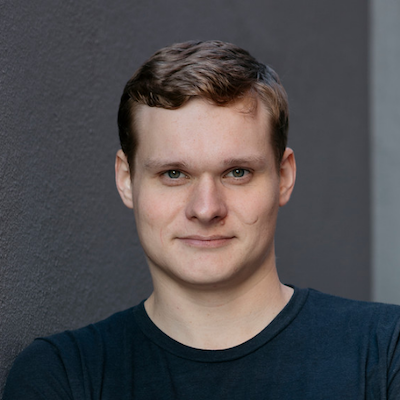
is a gifted technologist and entrepreneur who is cofounder and CEO of Near Inc, a company which has done much of the early research and development work for the NEAR project. Illia formerly managed a team at Google Research which worked on core question-answering capabilities and he co-developed the Tensorflow machine learning library used by the majority of applications in machine learning. He has been a driving force behind NEAR from its earliest inception.
Also of note, Ali Yahya has joined as a nonvoting advisor and observer of the council. Ali is an engineer who formerly excelled in Google’s Brain and Moonshot divisions and who is currently a partner at Andreessen Horowitz. He brings both technical depth and strategic guidance to the Foundation.
As you can see, this initial council — which is populated with successful execution-oriented entrepreneurs and technologists who have been working together since last year — is specifically designed to provide NEAR with the support it needs to build its technical infrastructure and deliver its vision to help developers and founders across the world. I’m privileged to support them and to have their support on this journey.
How the Foundation will Operate
There are many models for the operation of nonprofits and foundations but few which create the kind of operational efficiency, clarity of vision and quality of output which are absolutely necessary to deliver world class software and seed a global ecosystem. Technological development doesn’t behave the same way as charitable giving and there is no reason to confuse the two models.
The NEAR Foundation stewards a purpose without borders or boundaries and thus its operations will span the globe. We are competing with massive technology companies to marshall the best talent in the world to solve some of the hardest technological and societal challenges of our time. It will require significant skills and resources to attract world class teams and coordinate the governance of the protocol as it grows.
To achieve such an ambitious purpose, the NEAR Foundation has to combine the best practices of a high growth technology project with the purpose-driven nature of a nonprofit. Our DNA is fundamentally entrepreneurial. Everyone who is involved knows that we have to hold ourselves to the same standards of operational excellence that drive successful disruption in other industries.
In the path towards realizing its purpose, the NEAR Foundation exists to address a number of specific challenges in the NEAR ecosystem:
- Coordination
- Allocation
- Advocacy
- Governance
Let’s look at each of these in greater depth.
1. Coordination
This ecosystem is made up of an ever-growing number of participants. The research, development and evolution of the NEAR Project requires coordinating a number of participants. During the early phases of the ecosystem, this means providing technical leadership for the design of NEAR Protocol and related tooling plus gathering those teams who can best build, test and deploy applications related to it.
As the ecosystem grows, we anticipate the scope of coordination to increase across a wider portfolio of tools and groups. In particular, the most important asset we have is our broader community of developers, entrepreneurs and end users so the Foundation will do all it can to provide them with the framework within which they can organize to support each other while still remaining a nonessential part of their operations.
2. Allocation
For the ecosystem to grow, its participants need to be given sufficient incentives to drive their participation. Our early mission is to do so by ensuring that the protocol itself creates the proper incentives to drive adoption but many aspects of the ecosystem development, including the development of the core protocol itself, can only be done with additional assistance.
The Foundation will drive its financial and technical resources to support teams at all layers of the ecosystem. On the financial side, this will include a balance of grant funding (for projects, teams or communities unable to support themselves) and possibly also participatory funding (eg incubation, acceleration and traditional investment). On the technical side, this includes work across the spectrum from advisory to coordinating the direct support of projects building on NEAR who need it to overcome their own technical issues.
3. Advocacy
When building something completely new, the biggest obstacle is that, by default, no one cares. To fulfill our purpose, we will need to raise the awareness of this new suite of tools and the problems they solve among end users, developers, regulators, governments, businesses and beyond. Each of these groups will require a different approach but education is core to each of them so the NEAR Foundation will be well invested in this effort.
This explicitly includes empowering local communities to host meetups, run workshops, organize hackathons, write documentation and otherwise do whatever it takes to help bring new participants into the ecosystem and up to speed. This is an emphatically collaborative effort across a wide range of entities that make up the NEAR ecosystem.
4. Governance
As part of a decentralized ecosystem, the NEAR Foundation exists to steward the purpose of that ecosystem through servant leadership. While the structure of the Foundation is designed from the start to be independent and nonessential, we want to ensure that it is serving the key stakeholders of our ecosystem in a way which is representative of their interests.
To that end, the community will play an active part in each of the key activities the foundation undergoes. Our goal here isn’t to reinvent governance from day one but to provide a template of strong communication and transparency to start with and, as the ecosystem matures, to cede more and more of those activities back to the community’s guidance through adding elements of direct democracy, corporate governance and representative systems as appropriate.
Early Stages
We are frequently asked how the Foundation will participate in the active running of the protocol and the distribution of its overall token resources during its earliest stages.
As part of the Roadmap to MainNet rollout, the Foundation is helping to test the network and stand up its initial nodes. Since there is no inflation during this period, the Foundation doesn’t gain any tokens by undertaking these activities and they are intended to be temporary.
Once the network progresses to its next phase, the Foundation will hand off the running of nodes to the decentralized community of validators. The Foundation doesn’t intend to run full MainNet validating nodes again or to participate in voting with any of the tokens under its direct or indirect control as part of the governance functions it oversees, though it may delegate some portion of its Endowment to other validators (not affiliated with any of its directors or executives) during the early phases of the network. The NEAR network will run and govern itself independently.
As part of the initial rollout, the Foundation has a number of tokens under its control or custody. One portion of those, the Endowment (which totals 10% of the initial amount), are reserved for the Foundation in order to support its long term operations. Another portion is distributed to early collaborators and backers. The last portion (which begins large but decreases in size by the day) is intended for distribution to the community via a variety of different means from drops to grants to sales and beyond over the next several years.
To allay any concerns about the Foundation’s involvement, almost all of the tokens in its possession, whether intended for its own use or for distribution, will be programmatically locked up to varying degrees. Half of the Endowment will be locked up for long term release and each of the distribution buckets will be locked in rough accordance with the intended timeline of their use. It should go without saying that the Foundation has the network’s integrity and health as its top priorities.
The Future
My father always liked to say that you should strive to be “nonessential but irreplaceable” and that’s a good roadmap for how the Foundation’s role will progress through time.
While it is an important force in standing up the network for the first time, the Foundation will transition to a position as a cheerleader and advisor for the ecosystem as it hands off more and more of the operation and governance of the network to its participants. Ultimately, the Foundation will persist as long as its Purpose remains unfilled but its path will be increasingly overseen and steered by the community at large as the project grows.
The Foundation will always be a unique entity in the NEAR ecosystem but it should be a nonessential one for that ecosystem’s continued operation and success.
I look forward to a day when it is no longer necessary for the world at all.
Next Steps
With MainNet live, we have moved into a different phase of NEAR’s development. You will hear more from us as the early distribution activities are rolled out and the steady state system governance design is released. We hope to always be a helpful source of information about the NEAR network in all its phases (through both calm and difficult times) and to provide ways for participants to onboard to the project and get acquainted with each other along the way.
You can be a part of this story as well.
The NEAR Foundation represents the manifested voice of all the developers and entrepreneurs who struggle to bring innovation to the rest of the world and we need your help because there is a long way to go. Whether you’re a gifted engineer, a hustling marketer, a visionary product person, a diligent operator, a passionate lawyer or just a community enthusiast — we have a spot for you somewhere.
Find your place among the teams that drive this forward at https://pages.near.org/careers or get involved directly as a Contributor at https://pages.near.org/community. If you are a developer, you can jump into the code at https://docs.near.org and if you are already a founder, you can find support for your journey from the Open Web Collective, a platform-agnostic founder community, at https://openwebcollective.com.
Join us and build the future today!
Sincerely,
Erik
CEO, NEAR Foundation